The modern workplace is undergoing a significant transformation driven by rapid advancements in artificial intelligence and digital technologies. Among these innovations, AI assistants have emerged as powerful tools that are changing how organizations operate and how employees perform their daily tasks. These intelligent systems are designed to support workers by automating repetitive activities, organizing information, and improving overall productivity.
AI assistants are becoming increasingly common in offices, customer service centers, and remote work environments. Businesses use these technologies to streamline workflows, analyze data, and enhance communication between teams. As companies adopt digital transformation strategies, AI-powered tools are helping them create smarter and more efficient workplaces.
The growing role of AI assistants reflects a broader shift toward technology-driven work environments where automation and human expertise work together. By combining machine intelligence with human decision-making, organizations can improve efficiency, reduce errors, and enhance innovation.
Table of Contents
ToggleUnderstanding AI Assistants in the Workplace
AI assistants are software systems powered by artificial intelligence that help users perform tasks through automation, natural language processing, and data analysis. These assistants can understand commands, answer questions, schedule meetings, and provide recommendations based on available information.
In workplace environments, AI assistants are often integrated into productivity tools, communication platforms, and enterprise software systems. Employees can interact with them using voice commands or text-based interfaces, making it easier to access information quickly.
These systems rely on machine learning algorithms that continuously improve their performance by analyzing patterns in user behavior and organizational data. Over time, AI assistants become more accurate and efficient in supporting workplace tasks.
By simplifying complex processes and providing quick access to relevant information, AI assistants enable employees to focus on higher-value activities that require creativity, strategic thinking, and problem-solving.
Enhancing Productivity and Efficiency
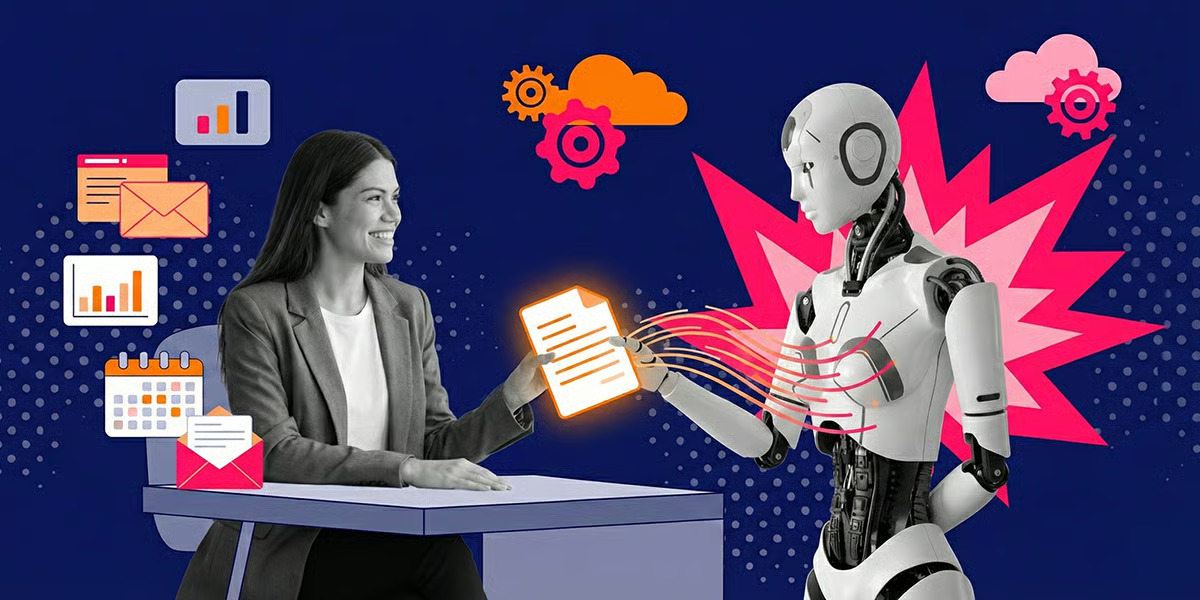
One of the most significant advantages of AI assistants in smart workplaces is their ability to increase productivity. Many workplace tasks involve repetitive actions such as scheduling meetings, organizing files, responding to routine emails, and managing documents. AI assistants can automate these activities, allowing employees to concentrate on more meaningful work.
For example, an AI assistant can automatically organize meeting schedules, send reminders, and prepare summaries of discussions. This reduces the time employees spend on administrative tasks and helps them manage their workloads more effectively.
In addition, AI-powered tools can analyze large amounts of business data within seconds. This capability enables managers and decision-makers to obtain insights quickly and make informed decisions based on real-time information.
As a result, organizations that implement AI assistants often experience improved operational efficiency and faster decision-making processes.
Supporting Collaboration and Communication
Effective communication and collaboration are essential for successful workplaces, especially in organizations that operate across multiple locations or rely on remote teams. AI assistants play an important role in improving communication by facilitating information sharing and team coordination.
These systems can summarize meeting discussions, track project updates, and ensure that all team members have access to relevant documents and information. Some AI assistants also provide translation features that allow employees from different language backgrounds to communicate more easily.
AI tools integrated into workplace communication platforms can also help manage emails, prioritize important messages, and reduce information overload. By filtering and organizing communication channels, these assistants make it easier for employees to stay focused and productive.
Through these capabilities, AI assistants help create more connected and collaborative work environments.
Data Analysis and Decision Support
Data has become one of the most valuable assets in modern organizations. However, analyzing large volumes of information can be complex and time-consuming for employees. AI assistants are increasingly used to support data analysis and decision-making processes.
These systems can process massive datasets, identify patterns, and generate insights that might be difficult for humans to detect. For example, AI-powered analytics tools can help businesses understand customer behavior, evaluate market trends, and monitor operational performance.
Managers can use these insights to develop strategies, improve business processes, and respond quickly to changes in the market. AI assistants may also generate predictive models that forecast future outcomes based on historical data.
By transforming raw data into meaningful insights, AI assistants help organizations make smarter and more strategic decisions.
Improving Customer Service and Employee Support
AI assistants are also widely used to enhance customer service and internal employee support systems. Many companies use AI-powered chatbots to handle customer inquiries, provide product information, and resolve common issues.
These virtual assistants operate continuously and can respond to customer questions instantly, improving service availability and response times. At the same time, human customer service representatives can focus on more complex cases that require specialized knowledge or personal interaction.
Within organizations, AI assistants can support employees by providing quick access to company policies, training materials, and technical guidance. For example, employees can ask an AI system questions about internal procedures or software tools and receive immediate assistance.
This capability helps improve both customer satisfaction and employee productivity.
Challenges and Ethical Considerations
Despite their many advantages, the adoption of AI assistants in workplaces also raises several challenges and ethical concerns. One major concern is data privacy and security. AI systems often rely on large amounts of organizational and personal data, which must be protected from unauthorized access.
Another challenge involves the potential impact of automation on employment. While AI assistants are designed to support workers rather than replace them, some routine job roles may change or evolve as automation increases.
Organizations must also ensure transparency and fairness in the use of AI technologies. Algorithms should be designed carefully to avoid bias and ensure that decisions made by AI systems are accurate and reliable.
Addressing these concerns requires responsible implementation, clear regulations, and continuous monitoring of AI systems in workplace environments.
The Future of Smart Workplaces
The role of AI assistants is expected to expand significantly as technology continues to evolve. Future workplaces may rely heavily on intelligent systems that integrate seamlessly with everyday business operations.
Advances in artificial intelligence, natural language processing, and machine learning will enable AI assistants to perform more complex tasks and provide more personalized support for employees. These systems may become capable of managing projects, predicting workflow bottlenecks, and offering strategic recommendations.
Smart workplaces may also incorporate AI-driven automation, smart sensors, and digital collaboration platforms that create highly connected work environments. Employees will interact with technology in more intuitive ways, allowing them to focus on creativity, innovation, and problem-solving.
As organizations embrace these technologies, the concept of the smart workplace will continue to evolve, creating new opportunities for productivity and growth.
Conclusion
AI assistants are playing an increasingly important role in shaping the future of modern workplaces. By automating routine tasks, improving communication, analyzing data, and supporting decision-making, these intelligent systems help organizations operate more efficiently and effectively.
The integration of AI assistants into workplace environments allows employees to focus on higher-level responsibilities while technology handles repetitive or data-intensive tasks. This collaboration between humans and machines has the potential to significantly enhance productivity and innovation.
Although challenges related to privacy, ethics, and workforce adaptation remain, responsible implementation of AI technologies can help organizations maximize their benefits. As artificial intelligence continues to advance, AI assistants will become a central component of smart workplaces and the future of work.